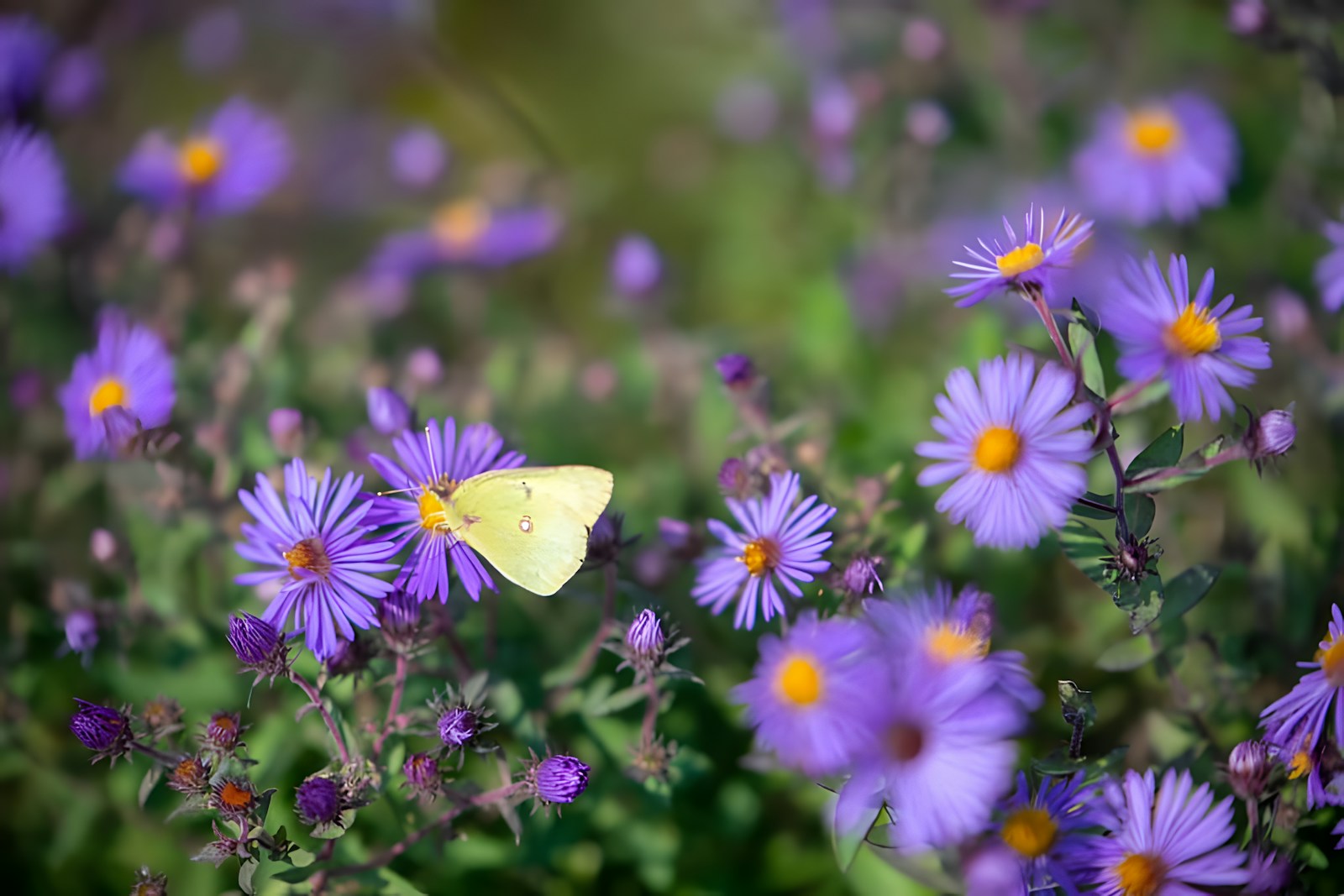
Asters are daisy-like flowers in shades of purple, blue, pink, red and white. Gardeners grow two quite different plants under the name. China aster is a showy annual raised from seed for cutting. Perennial asters, such as New England and New York asters, come back every year and flower late in the season. Both are easy in sun and good soil.
Sowing and planting
China aster. Start seed indoors 6 to 8 weeks before your last frost. Cover it with 1/8 inch (3 mm) of fine compost and keep it at 65 to 75°F (18 to 24°C). Seedlings usually appear in 7 to 14 days. Grow them on in bright light, a little cooler.
Harden off seedlings for about a week before planting out. Hardening off means getting them used to outdoor sun and wind by setting them out for longer each day. Plant out after your last frost, 9 to 12 inches (23 to 30 cm) apart.
You can also sow directly outdoors after your last frost, once the soil has warmed. China asters flower for only a few weeks per sowing. For cut flowers over a longer season, sow a new batch every 2 to 3 weeks until about 14 weeks before your first autumn frost.
Perennial asters. Most gardeners start with young plants or divisions. Plant them in spring after the last frost, or in early autumn at least 6 weeks before the ground freezes. Set them at the depth they grew in the pot. Space New York asters 18 to 24 inches (45 to 60 cm) apart and New England asters 24 to 36 inches (60 to 90 cm).
Perennial asters also grow from seed, but it needs cold stratification (a spell of cold, moist conditions that breaks dormancy). Sow outdoors in autumn and let winter do the work. Alternatively, mix seed with damp sand and keep it in the fridge for 4 to 6 weeks before sowing indoors. Seed-raised plants of named varieties vary, so buy plants when you want a specific colour.
Growing on
Both types have fairly shallow roots and sulk in drought. Water deeply once or twice a week in dry weather, aiming at the soil rather than the leaves. Wet leaves encourage mildew and other diseases.
Mulch with 2 inches (5 cm) of compost or shredded bark to hold moisture. Keep it an inch (2.5 cm) clear of the stems.
Feed lightly. Mix compost into the bed at planting time. China asters benefit from a balanced liquid feed every 3 to 4 weeks until buds form. Perennial asters rarely need more than a spring top-dressing of compost. Too much nitrogen gives soft, floppy growth.
Pinch China asters once, when plants are about 6 inches (15 cm) tall, for more side stems. Skip this if you want one large flower per stem for cutting. Stake tall varieties early, or grow them through horizontal netting.
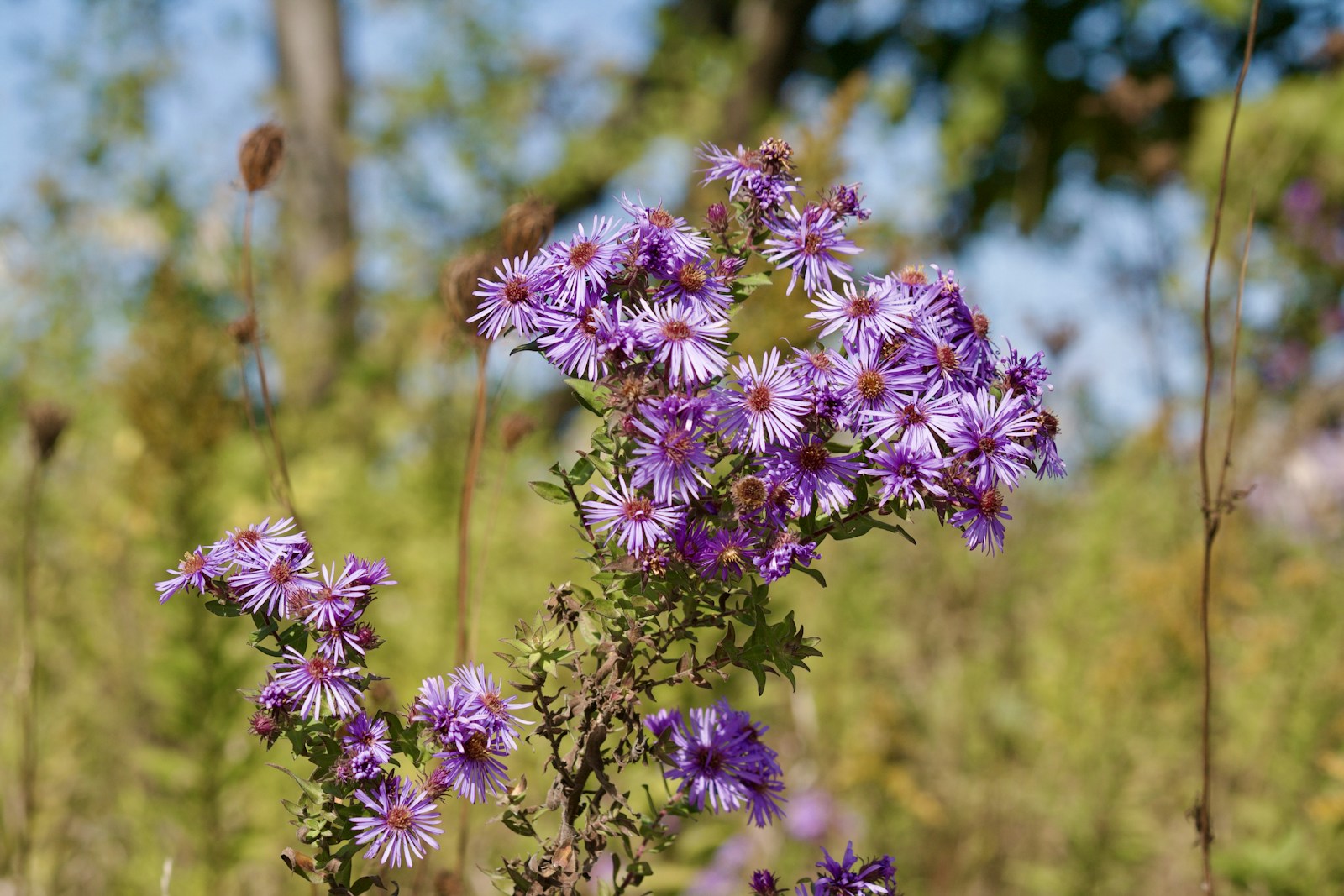
Pinch or cut back perennial asters by about half in late spring and again in early summer. This makes them shorter, bushier and less likely to flop. Stop cutting by midsummer, or you remove the flower buds. Unpinched New England asters often need stakes or a ring support.
Divide perennial asters every 2 to 3 years in spring, when the centre of the clump dies out. Lift the clump, discard the woody middle and replant the vigorous outer pieces.
Deadhead China asters to tidy them, though each plant blooms mainly in one flush. Leave some perennial aster seed heads standing for birds, or cut stems down after flowering to limit self-seeding.
Perennial asters are among the most valuable late flowers for bees and butterflies. They supply nectar when little else is in bloom.
Harvesting
Cut China asters when the flowers are fully open, because buds do not open well in water. Cut in the cool of the morning with clean snips. Strip the lower leaves and stand the stems in cool water straight away.

Change the vase water every couple of days and recut the stems. China asters usually last 7 to 10 days in a vase. Perennial asters also make good sprays for arrangements. Cut them when about half the flowers on a stem are open.
To save China aster seed, let a few flowers from open-pollinated varieties dry on the plant. Collect the fluffy heads once they turn brown. Rub out the seeds, dry them for a week and store them cool and dry in a labelled envelope. Hybrid seed does not come true.
Never grow China asters in the same spot two years running. Aster wilt, a soil-borne fungus, builds up quickly and kills plants just as they come into flower. Move them to fresh soil each year, and wait at least 3 to 4 years before returning to the same bed.
Problems and pests
Plants wilt and die suddenly, with dark streaks at the stem base
This is aster wilt, a Fusarium fungus that lives in the soil. There is no cure. Pull and bin affected plants rather than composting them. Rotate beds, and choose varieties described as wilt-resistant.
Flowers are green, stunted or twisted, and leaves turn yellow
Aster yellows is a disease spread by leafhoppers, small wedge-shaped sap-sucking insects. Remove affected plants at once. Control weeds, which harbour the disease. Cover young China asters with fine insect mesh.
White powdery coating on leaves
Powdery mildew is common on perennial asters in late summer, especially New York asters. Space plants for good air flow and water the soil in dry spells. Cut badly affected stems down after flowering. A potassium bicarbonate spray helps on early outbreaks; follow the label and wear gloves.
Bare, brown lower stems
Drought stress and crowding cause lower leaves to drop, especially on New England asters. Water deeply in dry weather and divide overgrown clumps. Plant shorter perennials in front to hide the stems.
Young shoots eaten in spring
Slugs and snails graze new growth. Hand-pick them on damp evenings, and use iron phosphate pellets if needed, following the label.
Varieties worth growing
China asters
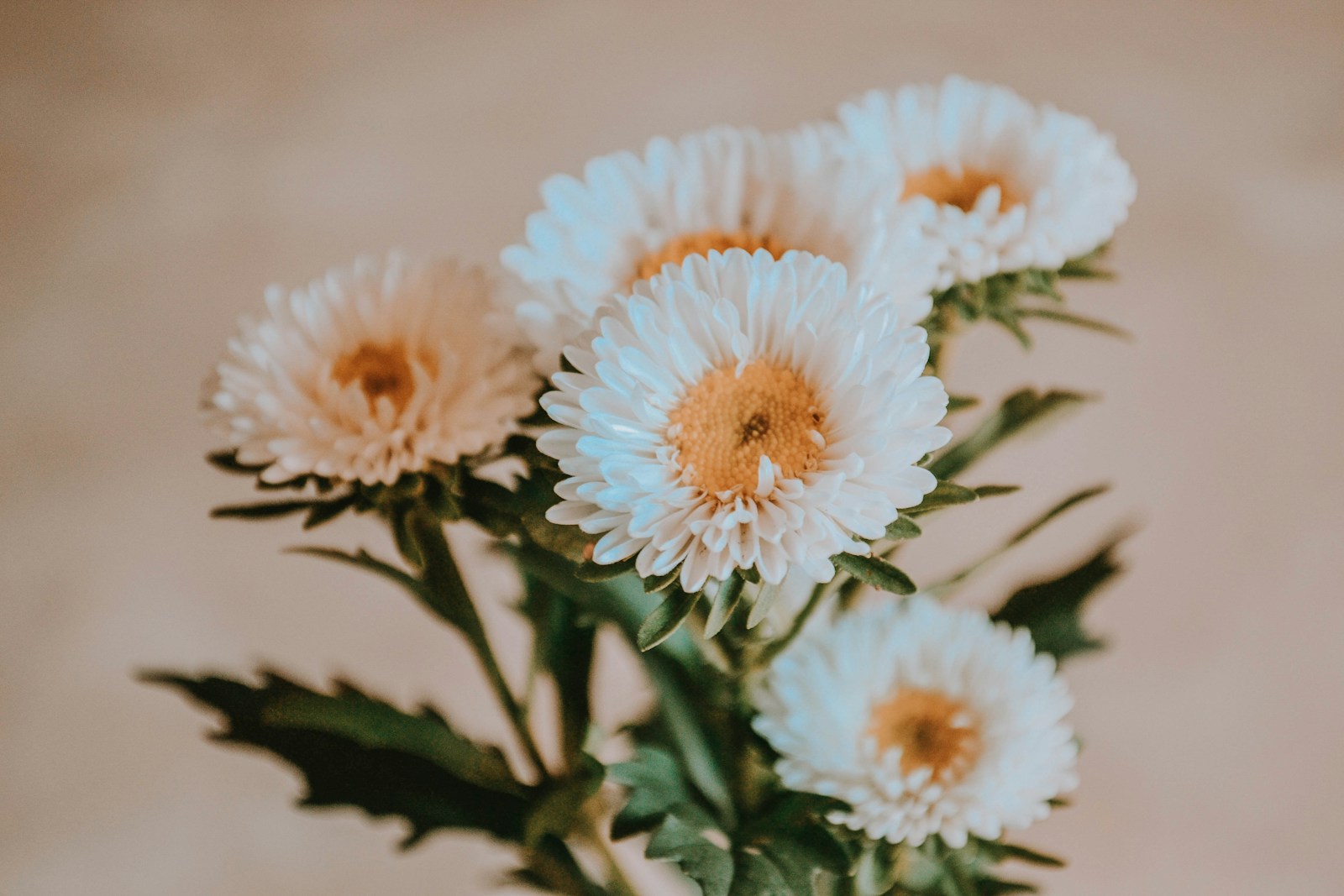
- 'Matsumoto' series: long-stemmed, wilt-tolerant plants bred for cutting, in a wide range of colours.
- 'Giants of California': tall, old-fashioned plants with large, shaggy double flowers.
- 'Duchess' series: incurved, chrysanthemum-like double flowers on sturdy stems.
- 'Powderpuff' series: fully double, pompom-like flowers good for cutting.
New England asters
- 'Purple Dome': a compact, mounding plant covered in deep purple flowers.
- 'Alma Pötschke': bright rose-pink flowers on upright stems.
New York asters
- 'Professor Anton Kippenberg': a short, bushy plant with lavender-blue flowers.
- 'Marie Ballard': taller stems with double, pale blue flowers.