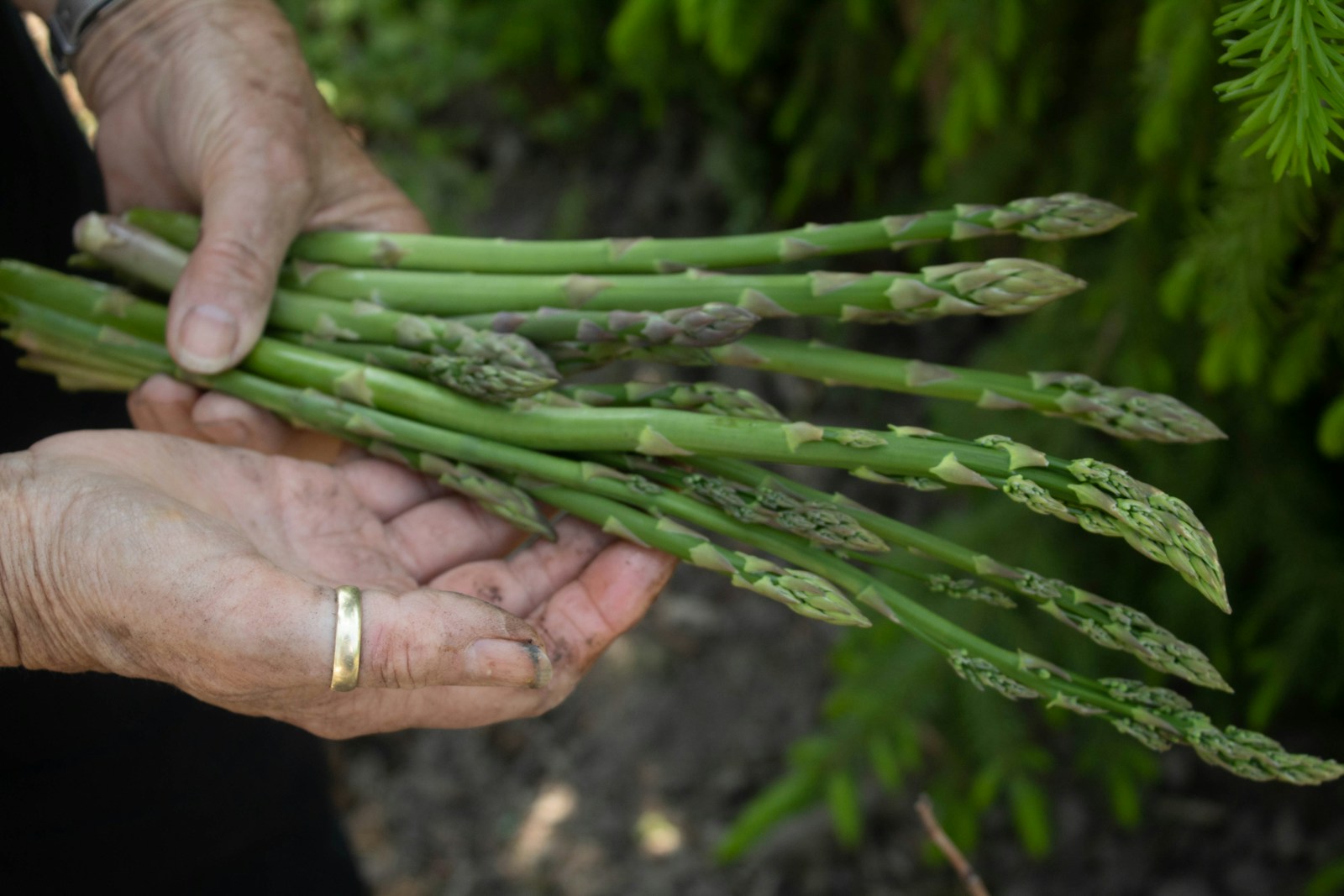
Asparagus is one of the few truly perennial vegetables. You plant it once, and a well-made bed crops every spring for 15 to 20 years or more. Fresh-cut spears are sweeter and more tender than shop ones. The catch is patience: you wait two or three years for a full harvest. Difficulty: easy to grow, but it rewards careful bed preparation.
Sowing and planting
Crowns or seed. Most gardeners start with crowns (one-year-old dormant roots). Crowns save a full year. Seed is cheaper and gives vigorous plants, but you wait longer and get a mix of male and female plants.
Choosing the site. Pick a sunny spot you will not want to dig for decades. Keep it away from trees and hedges, whose roots compete. Clear every perennial weed first, especially grasses and bindweed. Weeds are very hard to remove once the crowns are in. Dig in plenty of compost or well-rotted manure. On heavy or wet soil, build a raised bed, as crowns rot in waterlogged ground.
When to plant crowns. Plant in early spring, about 2 to 4 weeks before your last frost. The soil should be workable and near 50°F (10°C). In zones 9 and 10, you can also plant in late autumn or winter.
How to plant crowns.
- Dig a trench 12 inches (30 cm) wide and 6 to 8 inches (15 to 20 cm) deep.
- Mix compost into the base and form a low ridge down the middle.
- Set crowns on the ridge 12 to 18 inches (30 to 45 cm) apart, with roots spread down each side.
- Cover with 2 inches (5 cm) of soil and water well.
- As the shoots grow, add more soil a little at a time. Always leave the tips showing. By late summer the trench should be level.
Starting from seed. Soak seed overnight. Sow indoors 12 to 14 weeks before your last frost, 1/2 inch (1 cm) deep, in deep cells or pots. Keep them at 70 to 85°F (21 to 29°C); germination can take 2 to 3 weeks. Harden off (get them used to outdoor conditions) and plant out after the last frost. Move them to their permanent trench the next spring.
Growing on
Watering. Water young beds deeply and regularly for the first two years. Established plants have deep roots and cope better with dry spells. They still crop better with steady moisture during spear season and while the ferns grow.
Feeding. Spread 1 to 2 inches (2.5 to 5 cm) of compost over the bed each spring before spears appear. Give a balanced organic fertilizer after the harvest season ends. That feed powers the ferns, which build up the roots for next year.
Mulching and weeding. Weeds are the biggest threat to an asparagus bed. Hand-weed carefully, as hoeing damages the shallow buds on the crowns. Keep a 3 to 4 inch (8 to 10 cm) mulch of straw, shredded leaves or compost over the bed.
Supporting the ferns. Tall ferns can flop or snap in wind. Run a string on stakes along each side of the row to hold them up.
Cutting back. Leave the ferns standing all summer. They feed the crowns. Once they turn yellow or brown after the first hard frosts, cut them to 1 to 2 inches (2.5 to 5 cm). Clear the stems away to remove overwintering pests and disease. Some gardeners leave them until late winter to trap snow for insulation.
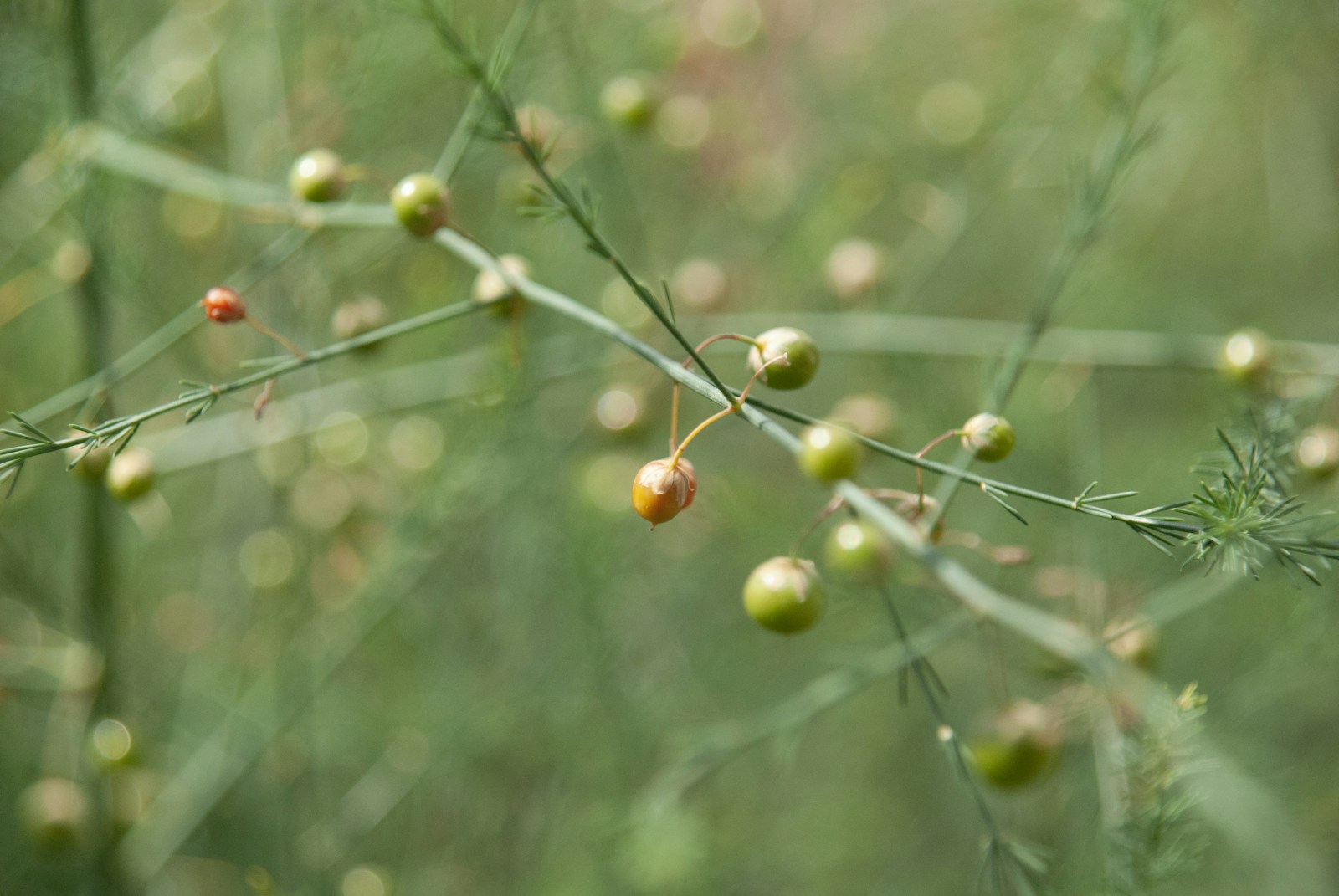
Male and female plants. Female plants set red berries, and their seedlings crowd the bed. Male plants set no berries and put their energy into spears. All-male hybrids therefore usually crop more heavily. Pull up any stray seedlings you find.
The red berries on female asparagus plants are poisonous to people and pets, and the ferny foliage can upset animals that chew it. Keep children and pets away from fruiting plants, and choose all-male varieties if that is a worry.
Harvesting
How long to wait. In the first year after planting crowns, harvest nothing. In the second spring, pick lightly for 2 to 3 weeks, or wait a further year if plants look weak. From the third spring, harvest for 6 to 8 weeks.
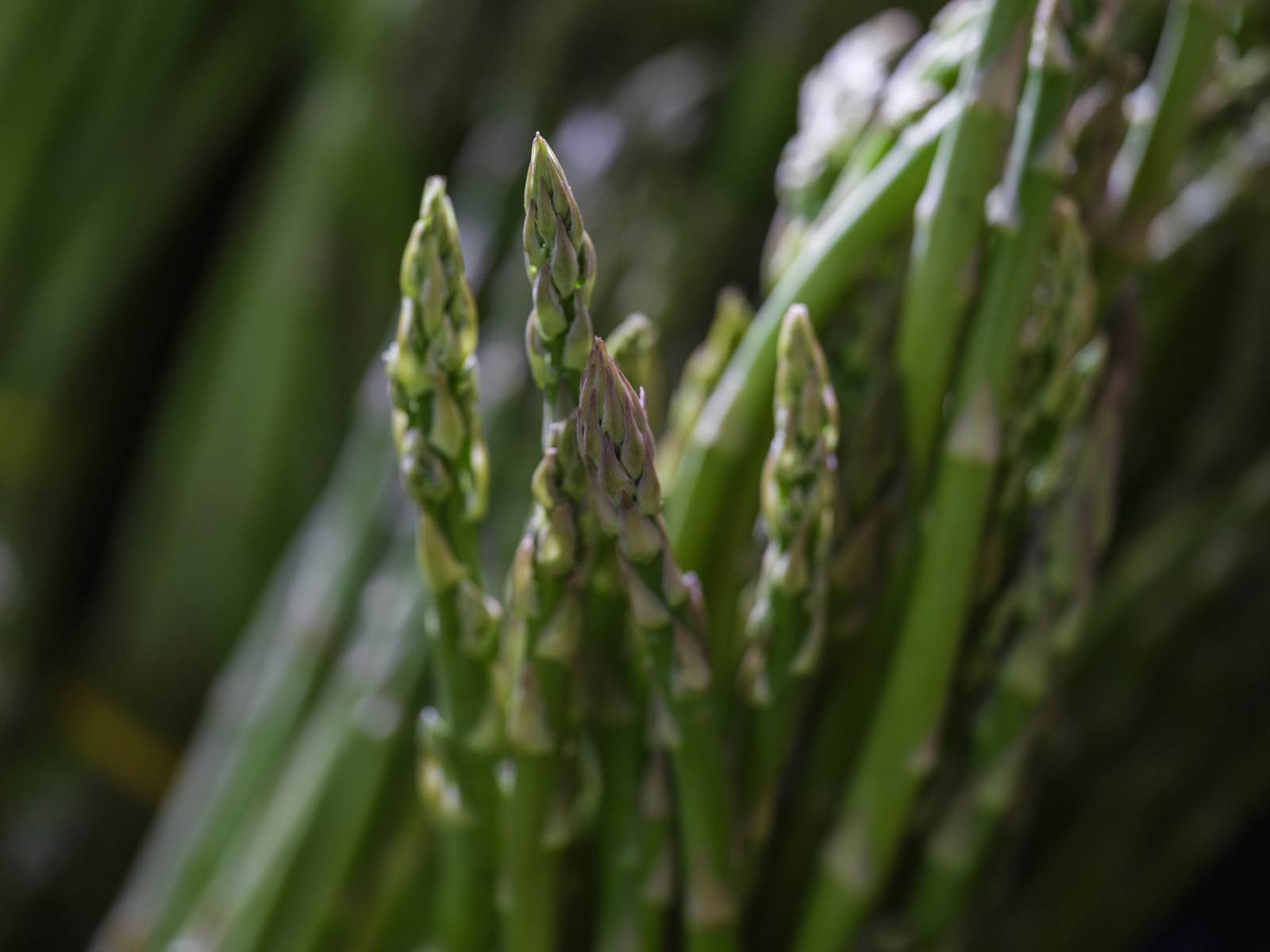
When a spear is ready. Cut spears when they are 6 to 10 inches (15 to 25 cm) tall and the tips are still tightly closed. Once the tip loosens and branches, the spear turns woody. In warm weather spears grow fast, so check every day or two.
How to cut. Snap each spear by hand at the point where it breaks cleanly, just above the soil. Or cut it at soil level with a sharp knife. Avoid slicing emerging spears nearby.
When to stop. Stop once most new spears come up thinner than a pencil. That signals the roots need to rebuild. Let all later spears grow into ferns.
Storage. Stand spears upright in 1 inch (2.5 cm) of water in the refrigerator. Or wrap the cut ends in a damp paper towel and bag them. Eat them within a few days for the best flavour. For longer storage, blanch and freeze.
Saving seed. Seed saving is possible but rarely worth it. Seedlings vary, and many are female. If you do collect berries, wear gloves and keep them away from children and pets.
Problems and pests
Chewed spears and stripped ferns
Asparagus beetles and their grey larvae feed on spears and foliage. Adults are small, with orange or spotted markings. Hand-pick them daily, or knock them into soapy water. Harvest often so eggs do not hatch on spears. Clear old ferns in autumn to remove hiding places.
Spears bent into a hook or curl
Early damage from wind, frost, insects or grit bends the spear as it grows. It is usually cosmetic. Shelter windy sites and keep up with beetle control.
Orange or rusty spots on the ferns
Asparagus rust is a fungal disease that weakens the crowns over time. Space plants for good airflow and water at the base. Cut down and remove infected ferns in autumn. Choose rust-resistant varieties for new beds.
Thin, few spears and yellowing plants
Fusarium crown and root rot usually strike stressed, crowded or poorly drained beds. Over-harvesting weakens them further. Improve drainage and feed well after harvest. Never plant a new bed where asparagus grew before.
Spears cut off at soil level overnight
Cutworms (moth caterpillars that live in the soil) sever young spears. Search the soil around damaged spears at dusk and remove them. Keep the bed free of weeds, which shelter the moths.
Varieties worth growing
All-male hybrids
Heavier cropping, with few or no berries or stray seedlings.
- 'Jersey Knight': vigorous and productive, with good disease resistance; suits many soils.
- 'Jersey Giant': thick green spears; a reliable choice in colder zones.
- 'Millennium': very cold-hardy and long-lived; popular in northern gardens.
Open-pollinated types
A mix of male and female plants, including berry-bearing females.
- 'Mary Washington': the classic heirloom, reliable and widely adapted.
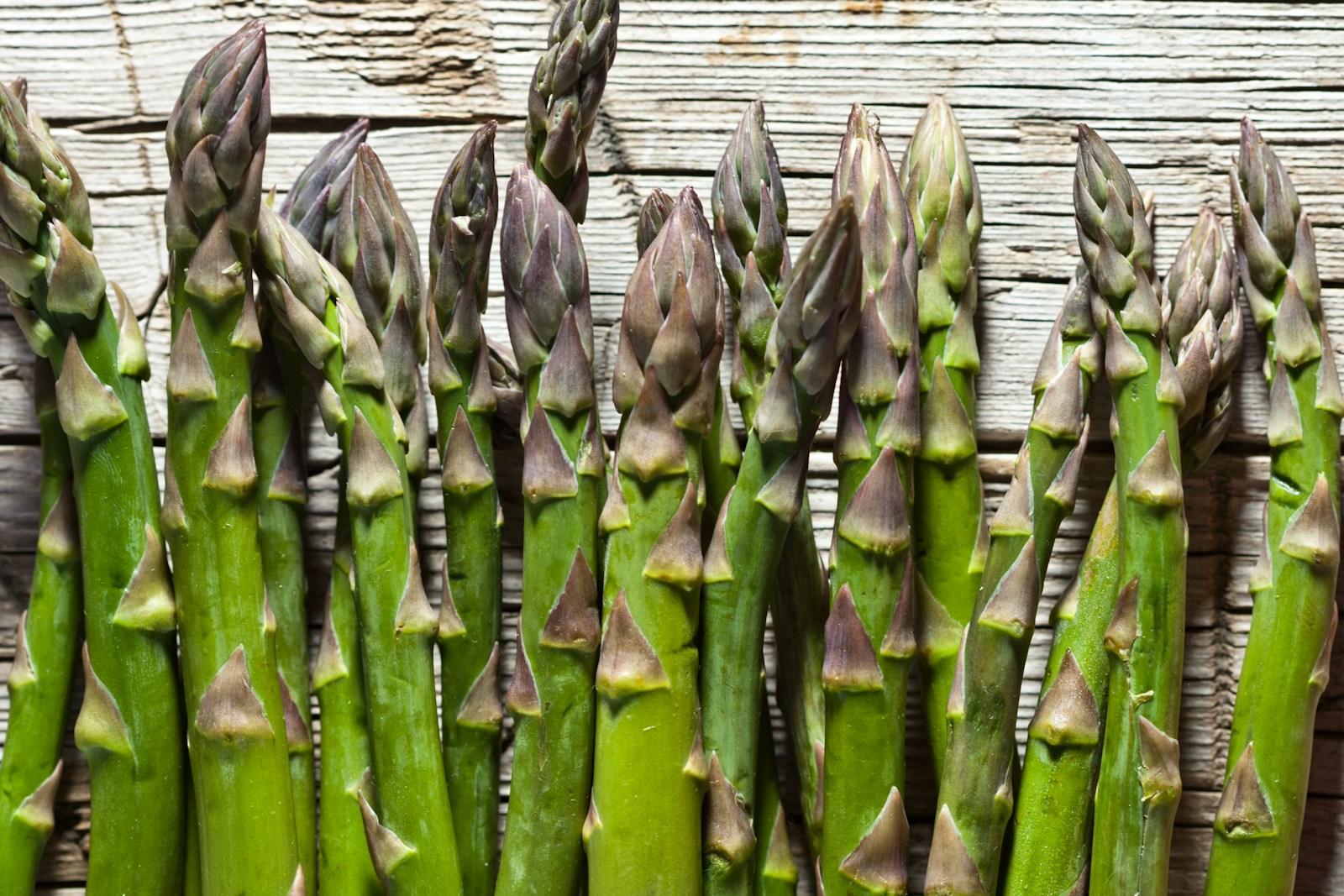
- 'Purple Passion': purple spears that are sweet and tender; they turn green when cooked.