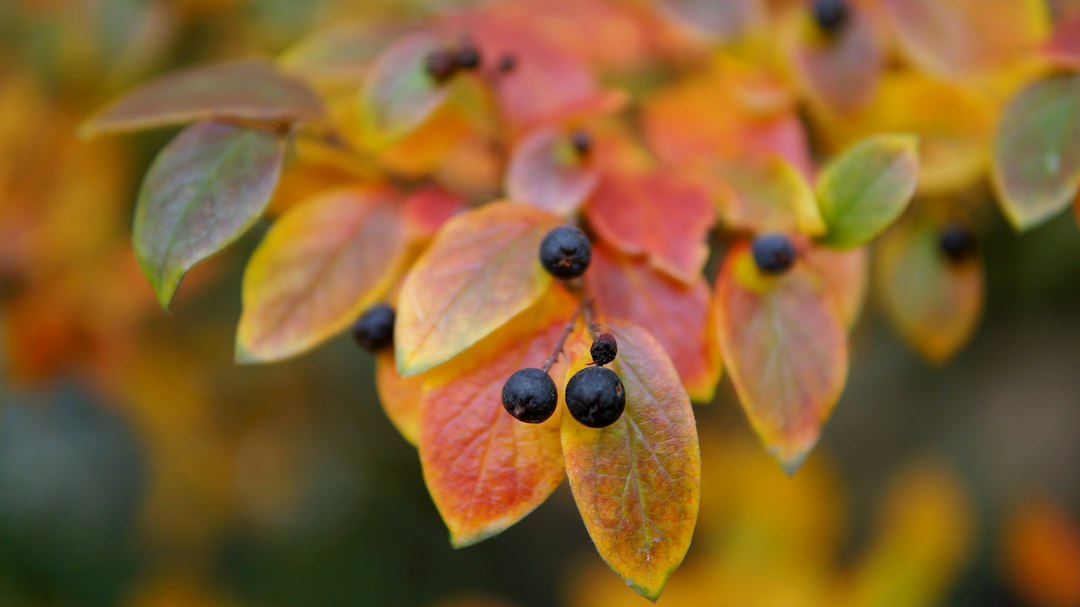
Aronia (Aronia melanocarpa), also called black chokeberry, is a tough, low-maintenance native shrub grown for its clusters of small, dark purple-black berries, airy white spring blossom, and some of the best red-to-maroon fall foliage of any fruiting shrub. It's a genuinely easy plant for beginners: it isn't fussy about soil, shrugs off cold winters, and asks for very little routine care once it's settled in. The berries are known for their notably high antioxidant content, which is exactly why most people grow aronia for juice, jam, baking, and drying rather than for eating out of hand — raw, the fruit is quite astringent (dry and puckery on the tongue), and "chokeberry" is not a name chosen by accident.
Sowing and planting
Aronia is normally planted as a young nursery shrub rather than grown from seed, since named varieties don't come true from seed and seed-grown plants take far longer to reach fruiting size. Buy a potted or bare-root shrub from a nursery and plant it in zone 6b once the ground is workable and free of hard frost, rather than during the heat of summer or the depths of winter.
Choose a full-sun to part-shade spot; more sun generally means more flowers and fruit, though aronia tolerates a fair amount of shade better than most fruiting shrubs. It isn't particular about soil type and copes with everything from heavy clay to sandy ground, as long as it isn't permanently waterlogged. Dig a hole as wide as the root ball and just as deep, set the shrub at the same depth it sat in its pot, backfill, and water in well. Space plants about 72 inches (180 cm) apart to give the shrub room for its mature, multi-stemmed spread.
Growing on
Aronia is unusually tolerant of both wet and dry conditions once it's established, which makes it a forgiving choice for spots where other fruiting shrubs struggle. Water regularly through the first growing season or two while roots establish, then expect to water only during extended dry spells. Feeding needs are light: a layer of compost or a balanced fertilizer in spring is plenty, and heavy feeding mostly just pushes leafy growth at the expense of fruit.
Pruning is minimal. Aronia fruits on both old and new wood, so established shrubs don't need an annual haircut to keep producing. The main task, usually every few years, is removing the oldest, thickest canes at ground level to make room for vigorous new growth and keep the center of the shrub open to light and air. Late winter, while the plant is dormant, is the easiest time to see which canes are oldest and do this work.
Harvesting
Aronia berries ripen to a deep, glossy black and hang in loose clusters, making them easy to strip off by the handful once they're ready. Color alone isn't always a reliable sign of ripeness, since the berries can look fully black while still tasting sharply tart; a ripe berry gives slightly to gentle pressure and the clusters pull away from the stem with little resistance.
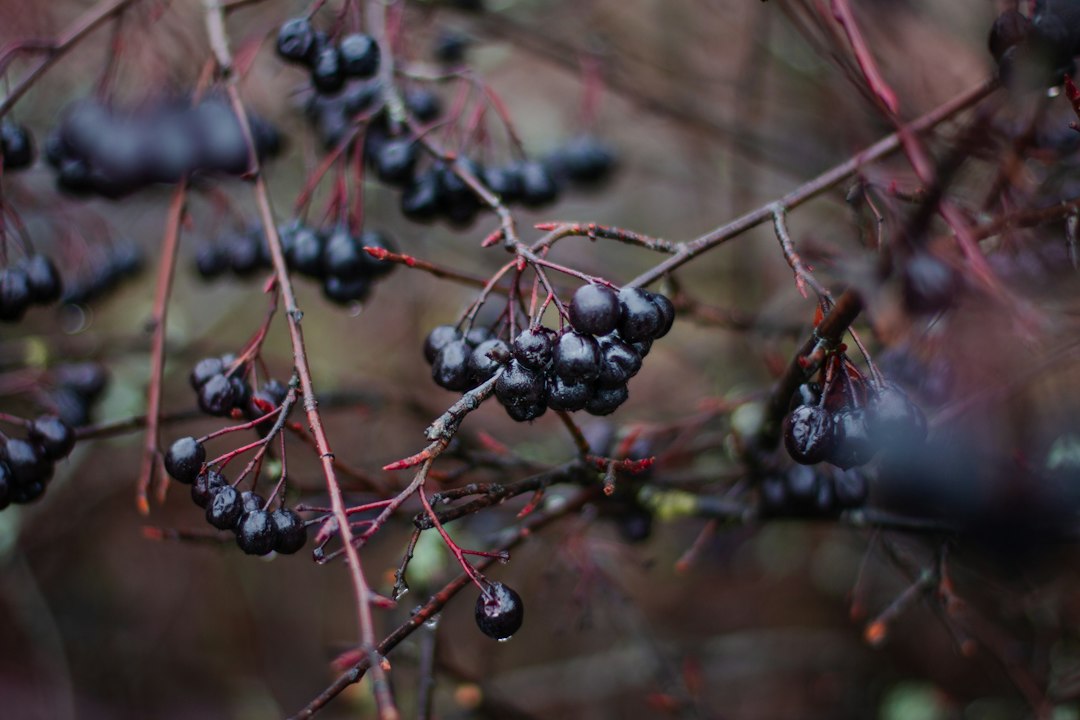
Unlike many fruits, aronia doesn't taste best fresh off the bush. The raw berries are notably astringent, and most growers don't aim to eat them straight at all. Instead, the usual approach is to process the harvest promptly into juice, jam, syrup, or baked goods, or to dry the berries, all of which soften the astringency and make the fruit far more palatable.
Problems and pests
Birds stripping the ripe fruit
Birds are often the biggest competition for the harvest, since they're drawn to the ripening berries just as readily as people are. Netting draped over the shrub as the fruit begins to color is the most reliable way to protect a crop you want for yourself.
Root suckers spreading beyond the planting site
Aronia spreads over time by sending up suckers (new shoots) from its roots, gradually forming a wider thicket than you may have planned for. Dig out unwanted suckers while they're small, or mow around the shrub if it's planted in a spot where some spread is acceptable.
Occasional leaf spot in humid weather
In a hot, humid summer, aronia can develop minor fungal leaf spotting, usually cosmetic rather than serious. Raking up and disposing of fallen leaves in autumn, and spacing plants well for airflow, keeps this from building up year to year.
Generally trouble-free otherwise
Beyond birds and the occasional cosmetic leaf issue, aronia has few serious pest or disease problems; it's one of the more carefree fruiting shrubs you can plant. Good airflow and avoiding constantly soggy soil are usually all the prevention it needs.
Varieties worth growing
- Viking is a widely grown, heavy-fruiting variety popular for juice production, with large berries on a vigorous shrub.
- Nero is another productive, widely available cultivar grown commercially for its reliable fruit set.
- McKenzie is a high-yielding selection often used in conservation plantings as well as home gardens.
- Autumn Magic is a compact ornamental variety bred for strong fall color alongside its fruit.
- Iroquois Beauty is a dwarf, rounded selection that fits smaller gardens while still flowering and fruiting well.