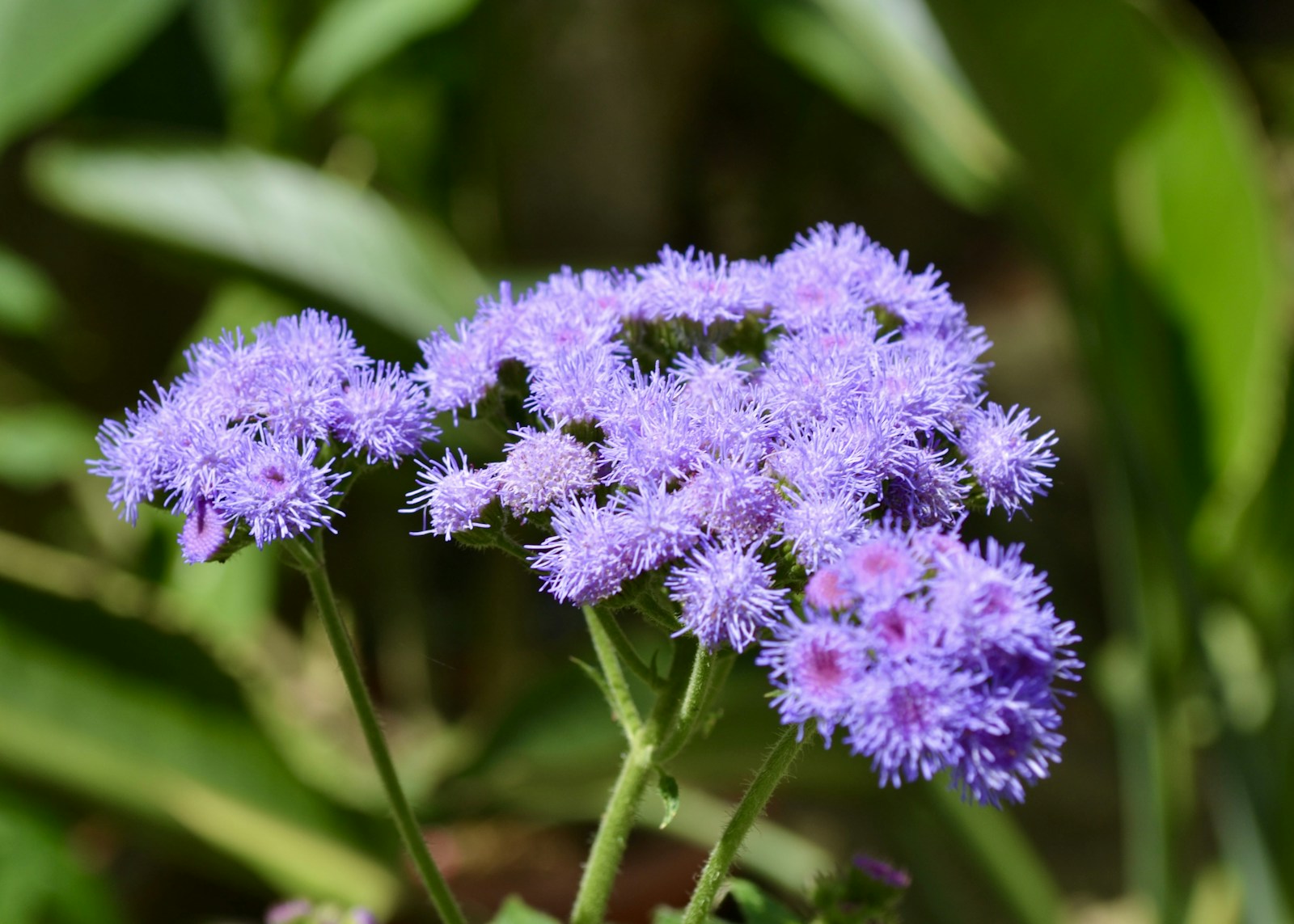
Ageratum, or floss flower, is a tender annual grown for its soft, fuzzy clusters of blue, lavender, pink or white flowers. Short types edge beds and fill pots, while tall types make long-lasting cut flowers. It is easy to grow once the weather is warm, and it blooms steadily until the first frost.
Sowing and planting
Start seed indoors 6 to 8 weeks before your last frost. The seed is tiny and needs light to germinate, so press it onto the surface of damp seed compost and do not cover it. Cover the tray with a clear lid to hold in moisture.
Keep the tray at 70 to 80°F (21 to 27°C). Seedlings usually appear in 5 to 10 days. Remove the lid once most have come up, and grow them on in bright light at about 65°F (18°C). Too little light makes them tall and weak.
When seedlings have two true leaves (the leaves that follow the first rounded pair), move each one to its own small pot or cell. Water from below so the fine roots stay undisturbed.
Harden off the plants for 7 to 10 days before planting out. Hardening off means getting seedlings used to outdoor conditions by setting them outside for longer each day. Plant out 1 to 2 weeks after your last frost, once nights stay above 50°F (10°C). Ageratum sulks in cold soil and stops growing if chilled.
In USDA zones 9 to 11, you can also sow directly outdoors after the last frost. Most gardeners in cooler areas buy young plants or start their own indoors, because the growing season is too short for direct sowing.
Space dwarf types 6 to 9 inches (15 to 23 cm) apart. Space tall cutting types 9 to 12 inches (23 to 30 cm) apart. Set plants at the same depth they grew in their pots, and water them in well.
Growing on
Ageratum wants steady moisture. Water deeply when the top inch (2.5 cm) of soil feels dry, and aim at the soil rather than the leaves. Plants that wilt badly often brown at the edges and stop flowering for a while. Pots and hanging baskets can need water every day in hot weather.
A 2 inch (5 cm) layer of fine mulch, such as shredded leaves or compost, keeps the roots cool and moist. Keep it an inch (2.5 cm) clear of the stems.
Feed lightly. Mix compost into the bed before planting. Then give a balanced liquid feed every 3 to 4 weeks in beds, or every 2 weeks in containers. Too much nitrogen gives lush leaves and fewer flowers.
Pinch out the growing tip of young plants once they have three or four pairs of leaves. Pinching means nipping off the top of the stem to make the plant branch. It gives you bushier plants with more flower heads. Tall varieties can flop in wind or heavy rain, so run a loop of twine around a row or use small twiggy supports.
Deadhead regularly. Old flower heads turn brown and papery and spoil the look of the plant. Many modern dwarf varieties drop their spent flowers on their own, but older types need you to snip off faded clusters. If plants look tired in late summer, cut them back by a third, water and feed. They usually flush again within a few weeks.
Ageratum draws butterflies and bees, especially to the blue varieties. It pairs well with marigolds, zinnias and salvias in mixed beds. In frost-free areas it can self-seed, so remove seed heads if you do not want seedlings.
Harvesting
Tall varieties make good cut flowers. Cut stems in the cool of the morning, when about half the florets in a cluster are open. Fully open heads fade faster in the vase.
Use clean, sharp snips and cut long stems just above a pair of leaves. New side shoots grow from that point, so cutting also keeps the plant blooming. Strip the lower leaves and stand the stems in cool water straight away. Change the water every couple of days. The flowers usually last about a week.
Short stems work well in small posies and as a filler with larger flowers. Ageratum also dries reasonably well. Hang small bunches upside down in a dark, airy place until crisp.
To save seed, choose an open-pollinated variety rather than a hybrid, because hybrids do not come true from seed. Let a few heads dry brown on the plant. Rub them over a sheet of paper to release the tiny seeds, then store them in a labelled envelope somewhere cool and dry.
Ageratum is toxic if eaten. The whole plant contains compounds that can damage the liver. Keep it away from grazing livestock, and plant it where dogs, cats and other pets will not chew it. Wear gloves if the sap irritates your skin.
Problems and pests
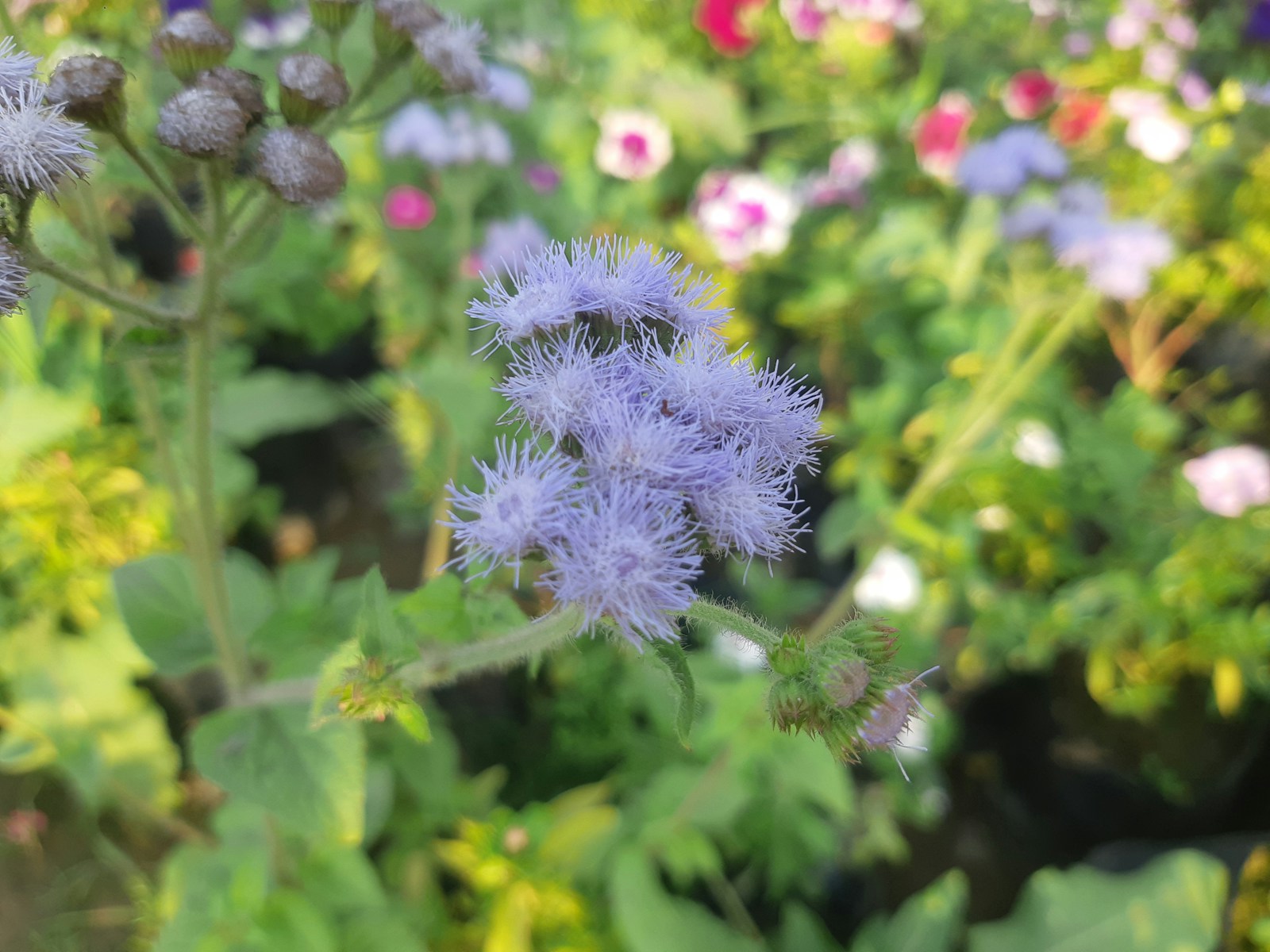
White powdery coating on the leaves
This is powdery mildew, a fungal disease that thrives when roots are dry and air is still. Space plants well, water the soil rather than the leaves, and keep them evenly moist. Remove badly affected leaves. A potassium bicarbonate spray helps on early outbreaks; follow the label and wear gloves.
Leaves sticky, curled or speckled pale
Aphids, whiteflies or spider mites are feeding on the sap. Check the undersides of leaves. Knock aphids off with a strong jet of water, and spray insecticidal soap for heavier infestations, following the label. Spider mites like hot, dry conditions, so misting and steady watering help.
Plants wilt and collapse even when the soil is wet
Root rot is the usual cause, from soggy soil or pots without drainage holes. Remove the dead plants. Replant in raised or well-drained soil, and let the surface dry slightly between waterings.
Flower heads turn brown and stay on the plant
This is normal ageing in older varieties, made worse by heat and drought. Deadhead regularly and water deeply. Give afternoon shade in hot climates.
Tall, thin, pale seedlings
Too little light and too much warmth after germination. Move seedlings to the brightest spot you have or under grow lights. Drop the temperature to about 65°F (18°C).
Varieties worth growing
- 'Blue Horizon': a tall hybrid, up to about 30 inches (75 cm), with lavender-blue flowers on long stems for cutting.
- 'Hawaii' series: compact edging plants, about 6 to 8 inches (15 to 20 cm), in blue, white and royal shades.
- 'Blue Mink': an older, sturdy dwarf with powder-blue flowers, about 8 to 12 inches (20 to 30 cm) tall.
- 'Red Sea': an unusual taller type with burgundy-red buds that open to purplish-red flowers.
- 'Artist' series: vigorous, heat-tolerant plants grown from cuttings, good in pots and baskets.